

Infections
Infections in tattoos
Despite established hygiene guidelines, infections remain the most common complications associated with tattoos. These are mainly caused by bacteria or viruses that enter the skin during or shortly after the tattooing process. This may occur due to insufficiently disinfected skin or needles, contaminated tattoo ink, or inadequate hygiene during tattoo aftercare by the client. In many cases, the exact source of contamination cannot be identified.
Early recognition of an infection is important in order to prevent further damage.
What does an infection look like in a tattoo?
The appearance of an infection can vary depending on the responsible microorganism.
The most common infections are superficial bacterial infections, usually caused by Staphylococcus aureus. These typically present with increasing redness, warmth, swelling, pain and sometimes yellowish discharge or crusting. The skin may look inflamed and feel tender to the touch.
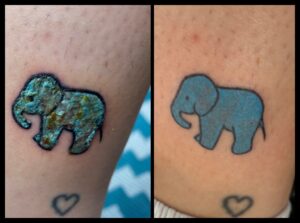
In permanent make up, a well known complication is reactivation of the herpes simplex virus. This can lead to painful blisters and sores, most commonly around the lips or eyes, often a few days after the procedure.
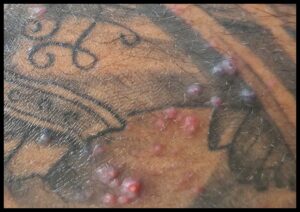
Mycobacterial infections are much rarer but often more persistent. They usually appear weeks after tattooing and often present as multiple red bumps or pus filled spots that do not heal and may slowly spread.
Fungal infections can also occur after tattooing, although they are uncommon. In some cases, a fungal infection found in a tattooed area may be unrelated to the tattoo itself.
Treatment
Superficial bacterial infections are usually well treatable, often with topical antibiotic creams and in many cases oral antibiotics. Because an infection damages the skin, some tattoo ink may leak out during healing. As a result, the tattoo can appear patchy or faded afterwards. In some cases, scarring may occur. This is why early treatment is important.
Mycobacterial infections are more difficult to treat. These bacteria are often resistant to common antibiotics, meaning treatment usually requires a combination of antibiotics taken for several months under specialist supervision.
If you suspect an infection in a tattoo, timely assessment by a medical professional is essential to reduce the risk of permanent skin damage.
Views: 0