

Complications-other
In addition to allergies, infections, and autoimmune reactions, a wide range of other complications can occur as a result of tattooing. The most common “complication” is dissatisfaction with the tattoo itself, although this is not necessarily a medical problem. Other genuine medical complications may include the following:
Blow-out (tattoo ink migration)
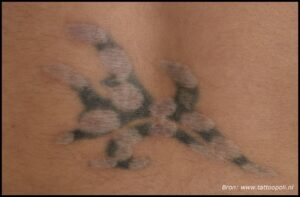
A blow-out refers to the unintended spread of tattoo ink beyond the original design. This typically occurs when pigment is placed too deeply into the skin, allowing it to disperse into surrounding tissue. Clinically, it appears as a blurred or shadow-like halo around otherwise sharp lines. Blow-outs are not inflammatory or allergic reactions, but technical complications related to depth and application. They are more frequently seen in areas with thinner skin. While not dangerous, they can be cosmetically disturbing. Treatment options are limited and may include laser correction or camouflage.’
Neurosensory Tattoo Reactions
A less well known complication is neurosensory pain or itch confined strictly to the tattooed area. Patients may report intense burning, stinging, or neurogenic itch, while the tattoo itself appears completely normal on examination. No visible inflammation, swelling, or rash is present. The underlying mechanism is not yet well understood. It is thought that minor nerve fiber alterations during tattooing may play a role, but in many cases no structural abnormality can be demonstrated. These symptoms can be persistent and difficult to treat.
Photosensitive Tattoo Reactions
Some tattooed individuals experience itching, burning, redness, or mild swelling in their tattoo when exposed to sunlight or ultraviolet radiation. This can occur in both recent and older tattoos. The exact mechanism is not always clear, but it is thought to involve a mild photo-irritative reaction of the skin or temporary activation of pigment-associated immune responses.
Certain pigments, particularly some red, yellow, or orange inks, appear more prone to these reactions. In most cases, the symptoms are mild and temporary and do not indicate a serious problem. Consistent sun protection, preferably with a broad-spectrum sunscreen of at least SPF 30, often helps to prevent or reduce symptoms.
Only in rare cases, when symptoms are persistent or severe, further dermatological evaluation may be necessary.
Complications After Tattoo Removal
Although laser treatment is considered the most studied and safest method for tattoo removal, complications can still occur. These may include scarring or pigmentary changes such as hypopigmentation. In some cases, complications result from incorrect laser settings or inappropriate laser choice. However, even with proper technique and the correct equipment, adverse effects cannot always be completely prevented.
Fore more information, see our page on laser tattoo removal.
Dermatology clinics also regularly see severe skin damage caused by alternative tattoo removal products. Chemical creams, acidic agents, or abrasive methods can cause deep burns and ulcerations of the skin. These wounds may heal with permanent scarring and pigmentary disturbances. From a medical perspective, such non professional removal methods carry significant risk and should be strongly discouraged. For more information, see our page on alternative tattoo removal.
Tattooing is generally safe when performed under hygienic conditions by experienced professionals. However, awareness of the broader range of possible complications allows individuals to make informed decisions and seek timely medical evaluation when needed.
Views: 0